If you’re planning a move to Florida’s Treasure Coast in 2026, there’s one question that comes up in almost every serious relocation conversation:“Should we live in Palm,

Dated: March 2 2026
Views: 19
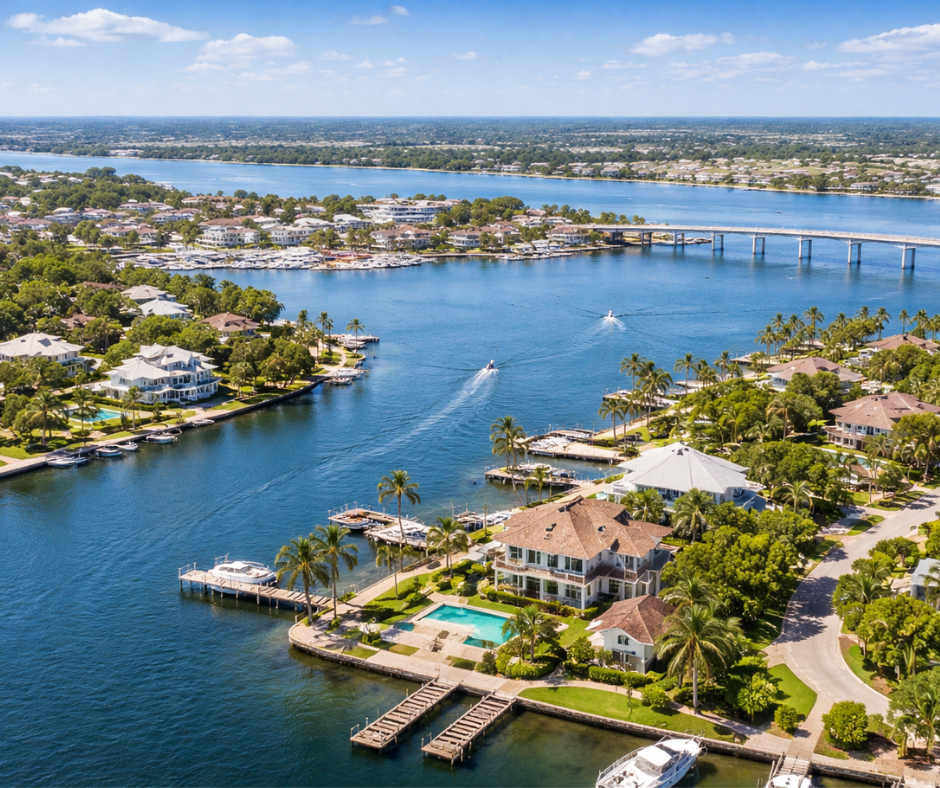 Palm City vs Stuart vs PSL" width="754" height="632" />If you’re planning a move to Florida’s Treasure Coast in 2026, there’s one question that comes up in almost every serious relocation conversation:
“Should we live in Palm City, Stuart, or Port St. Lucie?”
On a map, they look close. In reality, they offer very different lifestyles, price structures, growth patterns, and long-term value dynamics.
Buyers often assume they’re interchangeable because they’re within 20–30 minutes of each other. They are not.
This guide will walk you through the real differences — not just pricing, but feel, demographics, schools, traffic flow, waterfront lifestyle, development patterns, and long-term positioning — so you can make a confident decision in 2026.
All three cities sit along Florida’s east coast in what’s known as the Treasure Coast.
Palm City and Stuart are located in Martin County.
Port St. Lucie is just north in St. Lucie County.
Geographically, they share proximity to:
The Atlantic beaches (15–25 minutes depending on neighborhood)
Interstate 95 and Florida’s Turnpike
Palm Beach International Airport (roughly 45–55 minutes south)
The St. Lucie River system and Intracoastal Waterway
The physical distance between these areas is minimal.
The lifestyle distance is not.
Palm City feels suburban and established.
Stuart feels coastal and active.
Port St. Lucie feels expansive and growth-oriented.
Understanding that emotional difference is often more important than understanding the mileage.
The Treasure Coast market has normalized significantly compared to the 2021–2022 surge. While pricing always varies by specific neighborhood and condition, here is how the structure generally looks in early 2026.
In Palm City, most homes begin around the mid-$400,000s, with a significant portion of inventory sitting between $600,000 and $1.2 million. Waterfront properties, golf course communities, and gated neighborhoods regularly exceed $1.5 million.
Palm City homes often sit on larger lots. Many neighborhoods were built with lower density in mind. Mature landscaping, established streets, and long-term ownership are common characteristics.
There is less total inventory compared to Port St. Lucie. That limited supply historically supports stronger long-term value stability. When markets soften, Palm City tends to hold pricing better because there simply aren’t as many homes competing at once.
Buyers here are typically:
Established professionals
Families prioritizing schools
Boating enthusiasts
Retirees seeking quiet but upscale living
Palm City is rarely the “entry-level” choice. It’s more often the “we’ve decided this is where we want to settle” choice.
Stuart offers more diversity in housing stock. Entry-level condos can start in the mid-$300,000s, while riverfront estates exceed $1 million.
What makes Stuart different is variety. You can live:
In a downtown condo near the marina
In a quiet residential neighborhood
Along the river
Near the beach
In older historic pockets with character
The downtown area creates a unique lifestyle premium. Walkability, restaurants, marinas, and events draw both full-time residents and seasonal visitors.
Buyers attracted to Stuart often value:
Coastal charm
Marina access
Dining and social activity
Mixed housing options
Stuart carries a lifestyle identity that Palm City does not attempt to compete with. It is less suburban and more visibly coastal.
Port St. Lucie has the broadest price range and the largest overall supply of homes. Entry-level pricing typically starts around the mid-$300,000s, with many new construction homes available under $700,000.
Because PSL has expanded westward over the past decade, it offers something the other two cannot: scale.
Entire master-planned communities such as Tradition and PGA Village provide:
Newer homes
Builder warranties
HOA-managed amenities
Clubhouse living
Community-focused design
For buyers relocating from high-cost states who want:
New construction
Predictable HOA environments
More options under $600K
A younger demographic mix
Port St. Lucie becomes very attractive.
The tradeoff is density. As population growth continues, traffic and internal commute times within PSL can feel noticeably heavier compared to Palm City.
Understanding who lives in each area often clarifies whether it fits your lifestyle.
Palm City skews older on average than Port St. Lucie, with a high percentage of owner-occupied homes. Many residents have lived here for years.
The feeling is calm, stable, and residential. Streets are quieter. Commercial density is lower. It feels like a suburban community rather than a growing city.
There’s a strong boating culture, significant golf community presence, and a consistent family population connected to local schools.
It’s not built around nightlife. It’s built around neighborhood living.
Stuart offers a wider age range and more visible seasonal presence.
Downtown activity, waterfront restaurants, and marina traffic create energy that Palm City does not have.
Residents include:
Working professionals
Seasonal residents
Empty nesters
Condo owners
Boating enthusiasts
The vibe feels coastal and social. You see more visible lifestyle movement.
PSL has experienced significant growth over the last decade. Many buyers relocating from New York, New Jersey, Connecticut, and other northeastern states land here first because pricing and inventory are more approachable.
The demographic skews younger than Palm City.
There are more young families, more production-built communities, and more internal development projects underway.
If you prefer newer neighborhoods and visible expansion, PSL may align with your comfort level.
School zoning is often a decisive factor for families.
Palm City and Stuart are served by the Martin County School District, which consistently ranks among the strongest public school districts on the Treasure Coast.
Port St. Lucie falls under St. Lucie Public Schools.
For families relocating specifically for education quality, this distinction often tips the scale toward Palm City.
It’s not uncommon for buyers to eliminate Port St. Lucie solely because they want Martin County zoning.
Traffic is one of the most noticeable differences.
Palm City’s layout results in shorter internal drive times and lower congestion overall.
Stuart experiences seasonal congestion, especially near downtown and the bridges heading toward Hutchinson Island.
Port St. Lucie, due to size and population growth, has heavier traffic along main corridors like Becker Road, Gatlin Boulevard, and US-1.
If daily commute comfort matters significantly, Palm City often feels calmer.
Palm City and Stuart both offer substantial access to the St. Lucie River system.
Deep-water access properties, canal-front homes, and marina communities are prominent in both markets.
Port St. Lucie has canal communities but fewer true deep-water boating properties.
For buyers whose primary goal is boating lifestyle, Palm City and Stuart typically provide more consistent inventory options.
If you are seeking brand-new construction under $700,000, Port St. Lucie offers the widest selection in 2026.
Palm City has limited new development, mostly within higher-end gated communities.
Stuart sees smaller infill projects rather than large-scale expansions.
Your decision often comes down to whether you prefer:
Established neighborhoods with mature trees
Or newly built communities with modern layouts
Palm City’s limited inventory and school zoning have historically supported steadier long-term appreciation.
Stuart benefits from lifestyle premium and downtown demand.
Port St. Lucie’s appreciation tends to be more growth-driven and sensitive to supply fluctuations.
Each city can be a strong investment — but the risk profile differs slightly.
Choose Palm City if you value:
Top-tier public schools
Quiet suburban feel
Larger lots
Waterfront opportunities
Stability over rapid growth
Choose Stuart if you want:
Coastal charm
Walkable downtown
Marina access
Lifestyle variety
Choose Port St. Lucie if you prioritize:
New construction
More inventory
Lower entry pricing
Master-planned communities
The Treasure Coast market has shifted from the extreme seller dominance of 2021–2022.
Inventory has normalized.
Negotiation room exists.
Pricing strategy matters.
The most important factor today is not just choosing the right city — it’s choosing the right property within that city.
Palm City, Stuart, and Port St. Lucie are not competitors. They serve different buyer profiles.
The right decision depends on:
Your budget
Your school priorities
Your tolerance for growth and density
Your lifestyle goals
Your long-term plan
If you’re relocating in 2026 and want a customized breakdown comparing specific neighborhoods within these cities, I offer private consultation sessions tailored to your situation.
Choosing the right area upfront saves time, stress, and money later.
And clarity beats guesswork — especially in a balanced market.

Steve Banasiak is a Florida Broker and real estate leader specializing in Florida's Treasure Coast, including Port St. Lucie, Stuart, Martin County, Jupiter, and Tequesta. Licensed since 2013, Steve h....
If you’re planning a move to Florida’s Treasure Coast in 2026, there’s one question that comes up in almost every serious relocation conversation:“Should we live in Palm,
Is Port St. Lucie Still a Smart Move in 2026? Why Demand Remains StrongThe real estate landscape across the U.S. continues to evolve as we enter 2026 — and Port St. Lucie, Florida remains a
Whether you’re moving to Port Saint Lucie or just visiting, you’ll quickly learn this Treasure Coast city is more than just great neighborhoods and affordable living—it’s a
Thinking of making the move to Port Saint Lucie? Whether you’re a remote worker, retail pro, or healthcare specialist, knowing the local job market is essential. Here’s a comprehensive
 Copyright © MFRMLS.com All information deemed reliable but not guaranteed. All properties are subject to prior sale, change or withdrawal. Neither listing broker(s) or information provider(s) shall be responsible for any typographical errors, misinformation, misprints and shall be held totally harmless. Listing(s) information is provided for consumers personal, non-commercial use and may not be used for any purpose other than to identify prospective properties consumers may be interested in purchasing. Information on this site was last updated Last updated on September 22, 2026 12:31 PM UTC The listing information on this page last changed on Last updated on September 22, 2026 12:31 PM UTCd. The data relating to real estate for sale on this website comes in part from the Internet Data Exchange program of MFR MLS.
All information deemed reliable but not guaranteed. All properties are subject to prior sale, change or withdrawal. Neither listing broker(s) or information provider(s) shall be responsible for any typographical errors, misinformation, misprints and shall be held totally harmless. Listing(s) information is provided for consumers personal, non-commercial use and may not be used for any purpose other than to identify prospective properties consumers may be interested in purchasing.
Updated on September 22, 2026 12:31 PM UTC
Copyright © MFRMLS.com All information deemed reliable but not guaranteed. All properties are subject to prior sale, change or withdrawal. Neither listing broker(s) or information provider(s) shall be responsible for any typographical errors, misinformation, misprints and shall be held totally harmless. Listing(s) information is provided for consumers personal, non-commercial use and may not be used for any purpose other than to identify prospective properties consumers may be interested in purchasing. Information on this site was last updated Last updated on September 22, 2026 12:31 PM UTC The listing information on this page last changed on Last updated on September 22, 2026 12:31 PM UTCd. The data relating to real estate for sale on this website comes in part from the Internet Data Exchange program of MFR MLS.
All information deemed reliable but not guaranteed. All properties are subject to prior sale, change or withdrawal. Neither listing broker(s) or information provider(s) shall be responsible for any typographical errors, misinformation, misprints and shall be held totally harmless. Listing(s) information is provided for consumers personal, non-commercial use and may not be used for any purpose other than to identify prospective properties consumers may be interested in purchasing.
Updated on September 22, 2026 12:31 PM UTC
33. Required DMCA Notice
The Digital Millennium Copyright Act of 1998, 17 U.S.C. §512, the DMCA, provides recourse for copyright owners who believe that material appearing on the Internet infringes their rights under U.S. copyright law. If you believe in good faith that any content or material made available in connection with our website or services infringes your copyright, you (or your agent) may send us a notice requesting that the content or material be removed, or access to it blocked. Notices must be sent in writing by email to DMCAnotice@MLSGrid.com. The DMCA requires that your notice of alleged copyright infringement include the following information: (1) description of the copyrighted work that is the subject of claimed infringement; (2) description of the alleged infringing content and information sufficient to permit us to locate the content; (3) contact information for you, including your address, telephone number and email address; (4) a statement by you that you have a good faith belief that the content in the manner complained of is not authorized by the copyright owner, or its agent, or by the operation of any law; (5) a statement by you, signed under penalty of perjury, that the information in the notification is accurate and that you have the authority to enforce the copyrights that are claimed to be infringed; and (6) a physical or electronic signature of the copyright owner or a person authorized to act on the copyright owners behalf. Failure to include all of the above information may result in the delay of the processing of your complaint.
 The data relating to real estate for sale/lease on this web site come in part from a cooperative data exchange program of the multiple listing service (MLS) in which this real estate firm (Broker) participates. The data is provided exclusively for the user's personal non-commercial use, and may not be used for any purpose other than to identify properties that the user may be interested in purchasing or leasing. The properties displayed may not be all of the properties in the MLS's database, or all
of the properties listed with Brokers participating in the cooperative data exchange program. Properties listed by Brokers other than this Broker are marked with either the listing Broker's logo or name or the MLS name or a logo provided by the MLS. Detailed information about such properties includes the name of the listing Brokers. Information provided is deemed reliable but is not guaranteed to be accurate; you are advised to verify facts that are important to you. No warranties, expressed or implied, are provided for the data herein, or for their use or interpretation by the user. Florida Realtors® and its cooperating MLSs do not create, control or review the property data displayed herein and take no responsibility for the content of such records. Federal law prohibits discrimination on the basis of race, color, religion, sex, handicap, familial status or national origin in the sale, rental or financing of housing.
Show More...
The data relating to real estate for sale/lease on this web site come in part from a cooperative data exchange program of the multiple listing service (MLS) in which this real estate firm (Broker) participates. The data is provided exclusively for the user's personal non-commercial use, and may not be used for any purpose other than to identify properties that the user may be interested in purchasing or leasing. The properties displayed may not be all of the properties in the MLS's database, or all
of the properties listed with Brokers participating in the cooperative data exchange program. Properties listed by Brokers other than this Broker are marked with either the listing Broker's logo or name or the MLS name or a logo provided by the MLS. Detailed information about such properties includes the name of the listing Brokers. Information provided is deemed reliable but is not guaranteed to be accurate; you are advised to verify facts that are important to you. No warranties, expressed or implied, are provided for the data herein, or for their use or interpretation by the user. Florida Realtors® and its cooperating MLSs do not create, control or review the property data displayed herein and take no responsibility for the content of such records. Federal law prohibits discrimination on the basis of race, color, religion, sex, handicap, familial status or national origin in the sale, rental or financing of housing.
Show More...
 These listings are provided by the IDX Program of Brevard County, Florida. Real Estate listings held by brokerage firms other than LYNQ Real Estate are marked with the IDX Logo and detailed information about them includes the name of the listing brokers. IDX information is provided exclusively for consumers' personal, non-commercial use, and may not be used for any purpose other than to identify prospective properties consumers may be interested in purchasing. Information Deemed Reliable But Not
Guaranteed.
Copyright 2026 Space Coast Association of REALTORS, Inc
Show More...
These listings are provided by the IDX Program of Brevard County, Florida. Real Estate listings held by brokerage firms other than LYNQ Real Estate are marked with the IDX Logo and detailed information about them includes the name of the listing brokers. IDX information is provided exclusively for consumers' personal, non-commercial use, and may not be used for any purpose other than to identify prospective properties consumers may be interested in purchasing. Information Deemed Reliable But Not
Guaranteed.
Copyright 2026 Space Coast Association of REALTORS, Inc
Show More...
 All information deemed reliable but not guaranteed. All properties are subject to prior sale, change or withdrawal. Neither listing broker(s) or information provider(s) shall be responsible for any typographical errors, misinformation, misprints and shall be held totally harmless. Listing(s) information is provided for consumer's personal, non-commercial use and may not be used for any purpose other than to identify prospective properties consumers may be interested in purchasing. The data relating
to real estate for sale on this website comes in part from the Internet Data Exchange program of the Multiple Listing Service. Real estate listings held by brokerage firms other than LYNQ Real Estate may be marked with the Internet Data Exchange logo and detailed information about those properties will include the name of the listing broker(s) when required by the MLS. Copyright ©2026 All rights reserved.
Last Updated: September 22, 2026 12:11 PM UTC
Show More...
All information deemed reliable but not guaranteed. All properties are subject to prior sale, change or withdrawal. Neither listing broker(s) or information provider(s) shall be responsible for any typographical errors, misinformation, misprints and shall be held totally harmless. Listing(s) information is provided for consumer's personal, non-commercial use and may not be used for any purpose other than to identify prospective properties consumers may be interested in purchasing. The data relating
to real estate for sale on this website comes in part from the Internet Data Exchange program of the Multiple Listing Service. Real estate listings held by brokerage firms other than LYNQ Real Estate may be marked with the Internet Data Exchange logo and detailed information about those properties will include the name of the listing broker(s) when required by the MLS. Copyright ©2026 All rights reserved.
Last Updated: September 22, 2026 12:11 PM UTC
Show More...
